Gallery of Light: sculpture, space and sound
Thirteen sculptures, changing materials and a layered soundtrack: an independent IOM study that invites visitors to explore how light transforms a gallery.
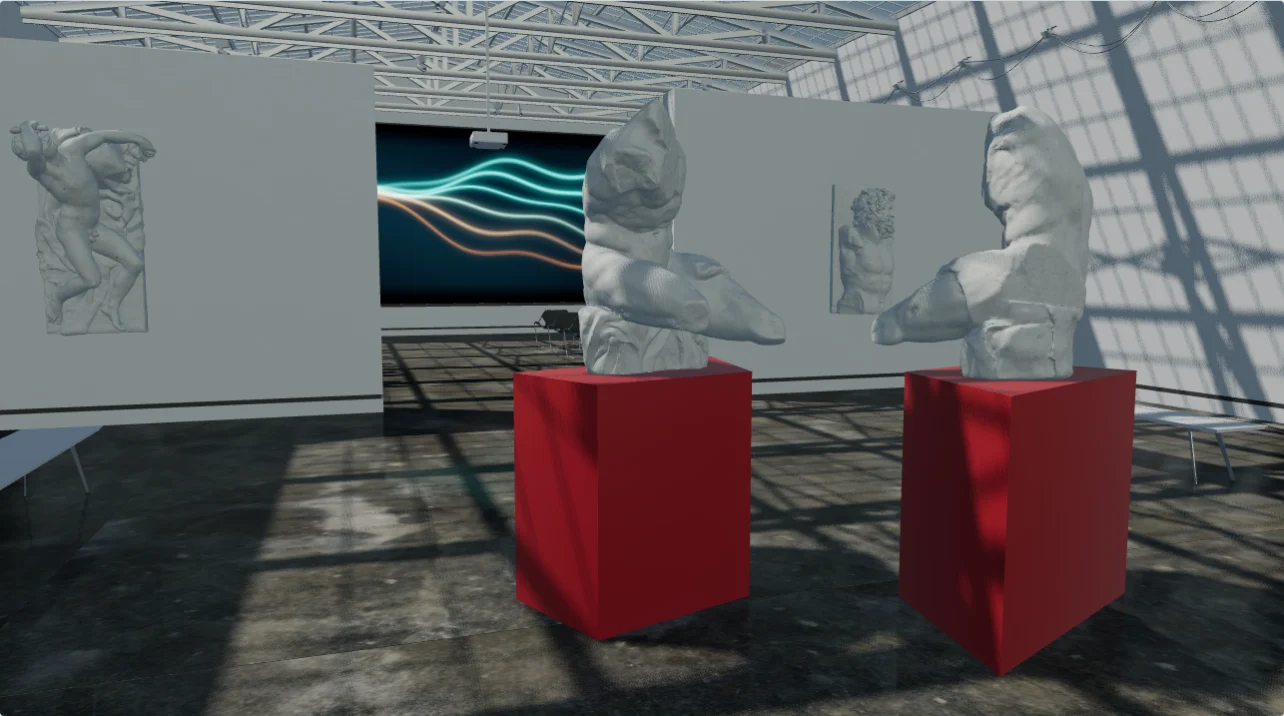
A familiar sculpture can feel very different when its surface, lighting or setting changes. Gallery of Light explores that relationship in an interactive space built for the browser. Classical figures and reliefs share a contemporary gallery with material experiments, moving shadows and a layered soundtrack.
This is an independent IOM study: a place to look closely, compare and listen. It brings architectural presentation and audiovisual interaction into one experience, with a guided route for a first visit and controls for visitors who want to investigate further.
A gallery with room to explore
Thirteen sculptures occupy two connected wings. Reliefs invite close inspection, freestanding figures can be viewed from several angles, and benches give the rooms a human scale. The roof structure, glazed openings and changing light remain part of the composition rather than simply framing the objects.
The guided tour takes about five minutes. It begins above the building, descends into the gallery and moves between selected viewpoints along routes through the rooms. Each stop introduces a different way of reading the work. Effects build gradually, giving the eye time to recognise the original surface before it changes.
Visitors can pause, restart or repeat the tour, switch to full screen, or choose a sculpture from a thumbnail menu. Manual exploration remains available throughout. Short descriptions explain the current study, including in full screen, so the visual change has a clear context.
Light and material as the subject
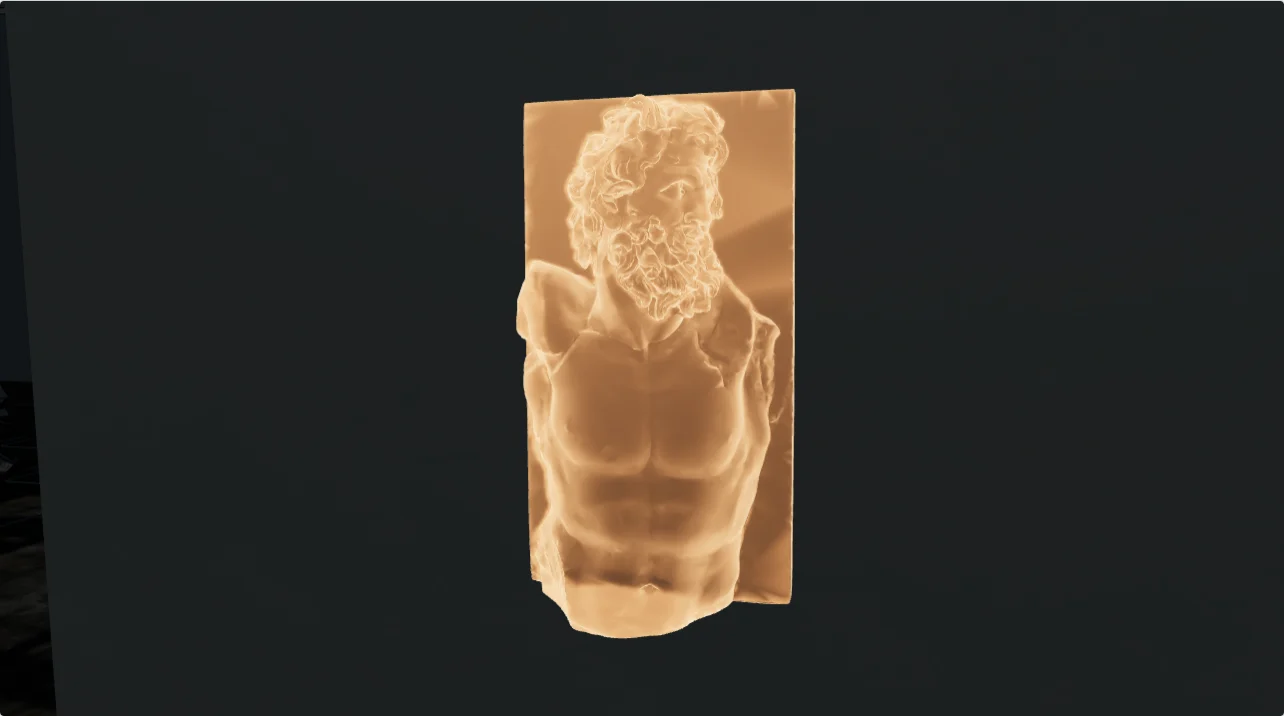
Eight studies examine seven sculpture treatments and a low mist across the gallery floor. Refraction makes a relief respond to the surrounding panorama; wireframe exposes a figure's underlying mesh. A warm, translucent material suggests light travelling beneath a surface. Another study deforms the projecting human figure while keeping its relief backing attached to the wall.
A spotlight isolates one sculpture. The material lab lets visitors adjust colour, roughness, metalness and surface coating. A glass torso adds an estimated caustic light pattern nearby, while floor mist changes the depth and atmosphere of the rooms. These are visual studies using real-time approximations, rather than measurements of how the original materials behave.
Environment intensity, sun position, shadows and floor reflections can also be adjusted. One tour stop moves the sun to show how shadows travel, then returns it to its starting position. That comparison makes the relationship between architecture, object and light particularly easy to see.
A soundtrack visitors can shape
Music starts when the visitor chooses Enter tour, providing a deliberate starting point for sound. Choosing to explore without the tour leaves the music silent until it is requested. Playback, mute and volume controls remain accessible in full screen.
The soundtrack has six separate layers: bass, guitar, keyboard, strings, synth and brass. A compact mixer offers individual levels, mute and solo, alongside a master volume. Guitar and brass enter occasionally; their quieter passages are part of the arrangement. Visitors can listen to the complete mix or uncover how its parts fit together.
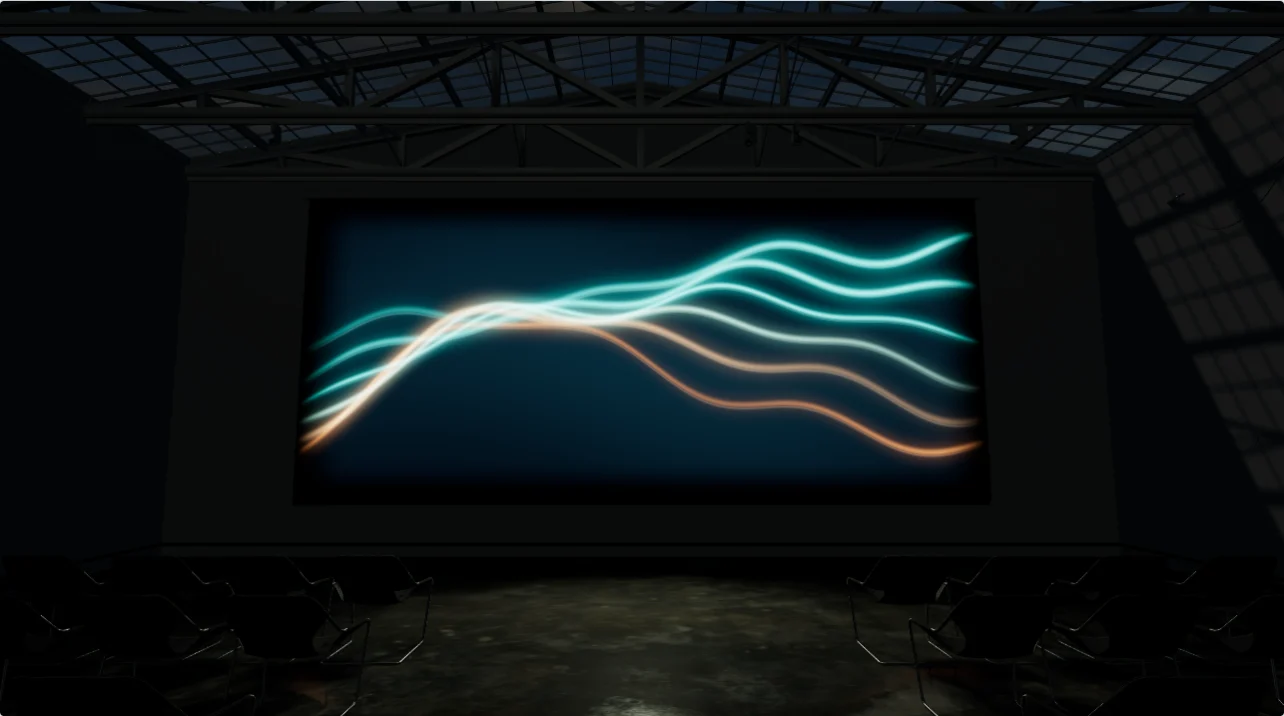
Near the end of the tour, a screen becomes the focus. Flowing light responds to frequency and energy information from the music being played. The gallery lighting settles around this audiovisual moment before the final return to the view above the building.
From a detailed scene to a browser experience
The original gallery and sculpture assets needed preparation for interactive use. Geometry was inspected and optimised offline in Blender, then exported as compressed web assets. Separate objects and meaningful controls were preserved so that lighting, materials and viewpoints could remain adjustable.
A loading introduction prepares the scene before entry. Controls adapt to smaller screens. Reduced-motion preferences stop movement in selected tour effects; visitors can still choose to start the guided tour. The interface keeps the artwork prominent while leaving the tools within reach.
Gallery of Light demonstrates how a spatial presentation can invite participation: a visitor can follow a narrative, stop at an object, change a condition and hear or see the result. It is a study in presenting form through interaction, with room for both a quiet first impression and closer examination.
Explore the gallery, read the project case study, or discover more work in IOM's 3D and 360° collections.